Language can be challenging enough when it is straightforward, but what happens when we intentionally play with words to take on new meanings? Have you ever heard people laugh at a joke, not understood what was funny and wondered what you missed? Have you ever laughed at a joke and tried (probably unsuccessfully) to explain the joke to someone who didn’t get it?
Idioms, euphemisms and double entendres all use hidden or double meanings to create humor, layered meanings and/or distorted meanings or to focus a joke to a select “in-group.” All of these devices use cultural understanding and a familiarity with a language, which is why many statements that are humorous or make sense to a native speaker can be baffling to a non–native speaker.
With so many double meanings and hidden meanings, it can be difficult to tell idioms, euphemisms and double entendres apart. Here is a introduction to all three literary devices and how to tell them apart.
Idioms
Idioms are phrases that have figurative, rather than literal meanings; often the phrases have more of an understanding of the meaning than a hard definition. Idioms are a real source of consternation for non-native language speakers, as meanings may seem to have nothing to do with the actual words used, such as French phrase the carrots are cooked (meaning the situation cannot be changed) or the Spanish phrase a lot of noise and no walnuts meaning all talk and no action.
Idioms often begin as phrases that had literal meaning at some point in the past, but the literal interpretation has long since been lost. This can be seen in the phrase “hands down,” which stems from a 19th-century horse racing term describing when a horse was so far ahead of the others that the jockey could remove his hands form the reins and still win the race.
Examples of English Idioms:
Cutting corners
Break a leg
It’s raining cats and dogs
Jump on the bandwagon
Why do We Use Idioms?
Idioms are often so ingrained into our culture that we might not even realize we are using an idiom, such as when we say piece of cake, live and learn, snowball effect or devil’s advocate. Idioms also often have the benefit of being able to express a complicated idea in a simple, pithy phrase (provided your audience is from a similar cultural background to you).
Euphemisms
Euphemisms are innocuous words or phrases that are used in the place of terms that might be offensive or unpleasant.
For example:
Death euphemisms: pass away, kick the bucket, bite the dust, rest in peace
Pregnancy euphemisms: with child, in a family way, knocked up, bun in the oven
Sex euphemisms: make love, sleep with, get laid, get lucky, screw
Toilet euphemisms: rest room, wash room, john, potty, loo, ladies’/men’s room, little girls’/boys’ room, the facilities
From Edward Albee’s Who’s Afraid of Virginia Woolf?
Honey: I want to…powder my nose.
George: Martha, won’t you show her where we keep the euphemism?
Euphemisms are usually used in place of words and terms associated with death, sex, profanity or bodily functions, but can also be used to deliberately distort or de–emphasize meanings. We can see this with the euphemisms economic downturn, collateral damage and friendly fire.
Types of Euphemism
Abstraction euphemisms serve to distract us from unpleasant realities, such as saying someone has passed away instead of died, or that an employee will be downsized rather than fired.
Indirection euphemisms replace a more explicit description or phrasing of an action, such as when someone goes to the bathroom or two people sleep together.
Litotes minimize ideas through the use of understatement or double negatives, such as in the statement, “He’s no Adonis” to express that someone is not attractive.
Mispronunciation alters pronunciation to lighten or lessen a word or phrase (usually an obscenity), such as saying shoot or jeez instead of the swear words they are replacing.
Modification euphemisms take an offensive noun and change it into an adjective, such as saying someone looks trampy, instead of calling the person a tramp.
Personification renames things not normally discussed with personal names, such as when someone names their genitals or other body parts.
Slang is almost entirely made up of euphemisms. For example, consider the slang terms for cannabis: weed, herb, dope, pot, skunk, ganja, mary jane, etc.
Why Do We Use Euphemisms?
The main reason we use euphemisms is to ease social interactions, particularly around sensitive subjects. Although taboos vary by culture, euphemisms allow us to discuss death, sex, bodily functions and other potentially uncomfortable topics with greater ease.
However, euphemisms can also deliberately distort meanings, if not reverse meanings. Historically, we can see this in the euphemisms special treatment and final solution used by Nazis. One of the most famous literary examples of using euphemism to change words’ meanings is in George Orwell’s Nineteen Eighty-Four, with the Ministry of Peace, Ministry of Love and Newspeak.
Double Entendres
A double entendre is a figure of speech that has two meanings: the literal, obvious meaning, and a second (or third) meaning. Often, the secondary meaning is of a sexual nature, but not necessarily, as seen in this example:
“What is the difference between ignorance and apathy?”
“I don’t know and I don’t care.”
Double entendres use puns, homophones, ambiguity, multiple meanings or different interpretations of the same meaning to create innuendo or humor. The hidden nature of double entendres’ second (or third) meanings makes them ideal for racy, suggestive or obscene humor, as it appears on the surface that nothing inappropriate was said. Double entndres rely on the audience to make connections, meaning some will get the joke, and others won’t.
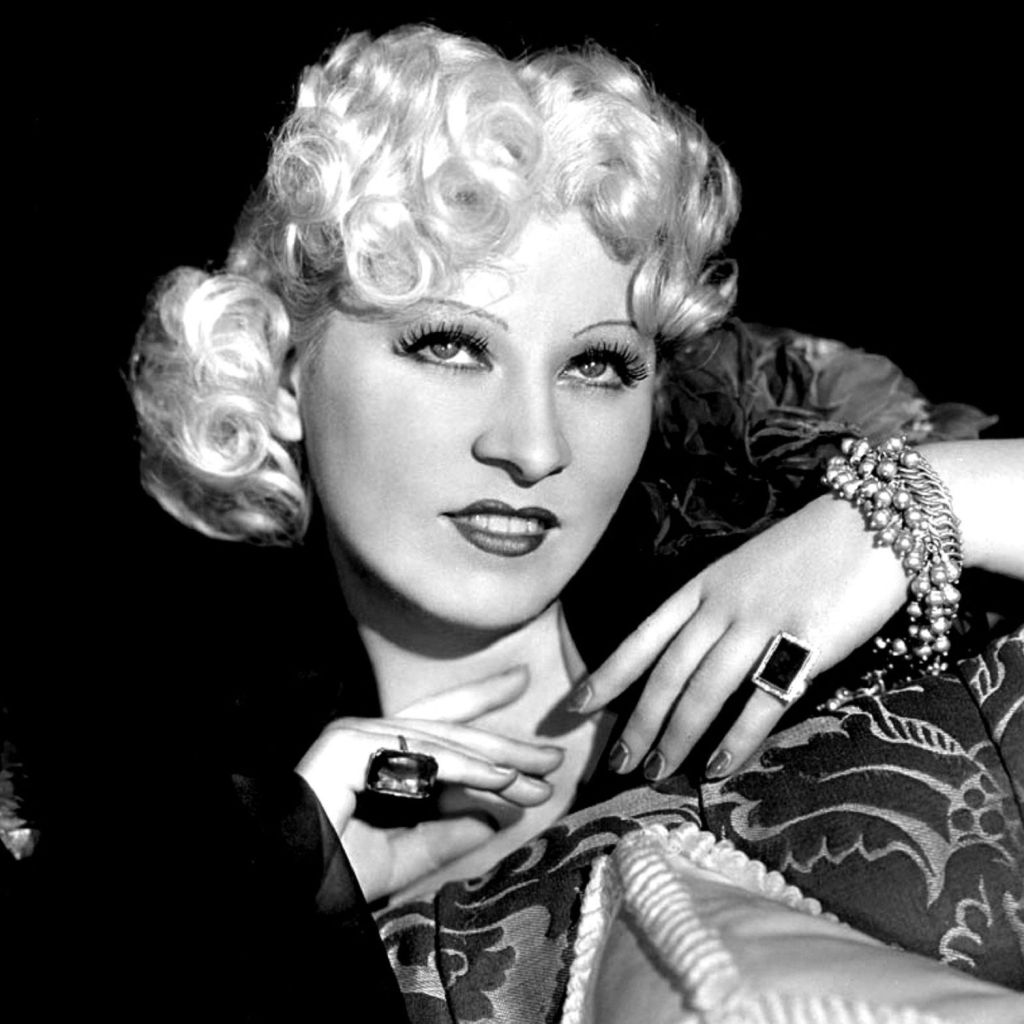
Examples of Double Entendres (courtesy of the Queen of Double Entrendres Mae West):
“Why don’t you come up and see me sometime—when I’ve got nothin’ on but the radio.”
“I feel like a million tonight. But only one at a time.”
“I’m no angel, but I’ve spread my wings a bit.”
“A hard man is good to find.”
Readers can find double entendres in the Odyssey (when Cyclops yells that “No-one” has hurt him), throughout Shakespeare’s plays (e.g., when Hamlet makes reference to “country matters” to Ophelia) and in Sir Thomas More’s Utopia (using the homophones utopia, which means “no place” and eutopia, which means “good place”).
Why Do We Use Double Entendres?
Double entendres allow writers to create potentially suggestive or salacious humor while maintaining a semblance of propriety. Sitcoms, movies, songs and other popular entertainment use double entendres to create humor or say something sexually suggestive while appearing innocent. Double entendres are also a way for writers to create layered meanings and humor in their works, often with the knowledge that the “right people” will get the joke.
 Grammaphile